 upfix.com
 888-979-9343
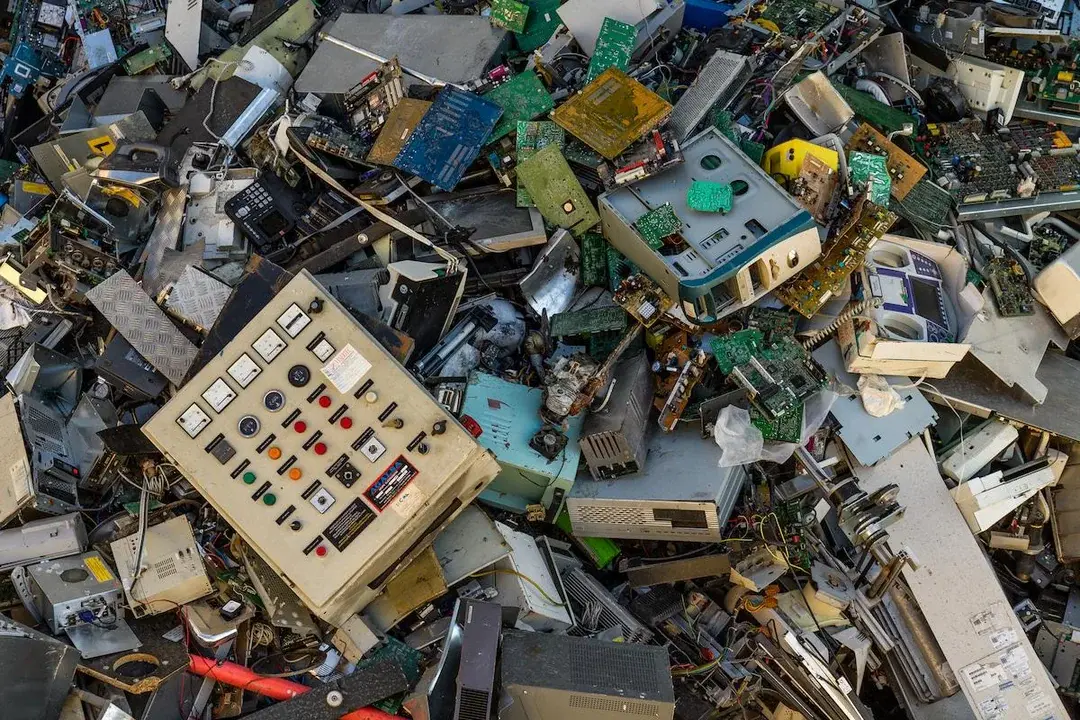
We replace way too much that could realistically be repaired. Every discarded board, every tossed module, every forgotten ECM adds to a waste crisis that sits in landfills for decades. There is a better way.
Most electronics don't just die; they fail in one small area that is often fixable with basic parts and some effort. Choosing repair over replacement reduces waste, saves resources, and cuts down on the energy and raw materials needed to manufacture new devices. Keeping devices in use longer is not just about saving money, it is about keeping tons of unnecessary electronics out of the environment.
The E-Waste Problem Is Bigger Than You Think
Electronic waste is the fastest-growing solid waste stream worldwide. The numbers behind this crisis are staggering, and they are accelerating every year, driven largely by a culture that defaults to replacement over repair.
What makes those numbers especially troubling is that the majority of discarded electronics are still functional or repairable. Consumers often replace devices due to minor issues, marketing pressure, or simply not knowing that a repair option exists. As a result, valuable components get tossed prematurely, wasting materials that could be reused and releasing toxic substances that contaminate soil and groundwater for decades.
"E-waste makes up only 2% of landfill mass but accounts for 70% of all toxic landfill waste. Lead, mercury, cadmium. The damage compounds with every device we throw away."
What Actually Happens When You Toss a Device
The journey of a discarded electronic device is rarely a clean one. Understanding where your device ends up and what it releases along the way makes the case for repair more concrete.
A board fails, a module locks up, a component burns out. The whole unit gets replaced even though 90% of it still works perfectly.
More than three-quarters of global e-waste is exported to countries in Africa and Asia. Much of what we believe is "recycled" is simply shipped overseas.
It Is Burned or Buried
To extract small amounts of gold and copper, boards are burned over open fires. Plastics are melted. Toxic fumes, dioxins, and heavy metals enter the air, soil, and water supply.
Meanwhile, factories mine and process rare earth metals, burn energy through production, and generate emissions, all to replace a device whose core failure was often a single small component.
Repairing a product instead of replacing it can reduce its climate impact by up to 40% over its lifetime, according to lifecycle analysis studies. For circuit boards specifically, repair generates roughly 85% fewer emissions compared to sourcing a new replacement board.
Why We Replace When We Should Repair
The shift from repairing to replacing did not happen by accident. It was deliberately engineered, and understanding how it helps us push back against it.
- Planned obsolescence: products designed to fail just after the warranty
- Components glued, soldered, or sealed to prevent user access
- Parts and service manuals made proprietary or unavailable
- Software updates that slow down older devices on purpose
marketing culture that normalizes "upgrade" over "repair".
- Component-level diagnosis that targets only the failed part
- Right to Repair legislation is expanding in the US and EU
- Repair services that preserve your original VIN and calibration data
- Modular, serviceable design standards are gaining ground
- A growing community choosing repair as a default first step
Seven US states have now passed Right to Repair legislation, with bills introduced in all 50 states. The EU has implemented directives that require manufacturers to make spare parts and repair information accessible. The tide is turning, but it depends on consumers making the choice to repair first.
What Choosing Repair Actually Changes
Repair is not just a personal financial decision; it is an environmental one, an economic one, and in the case of automotive modules and control systems, often the most practical one too.
Lead, mercury, and cadmium stay contained in functioning hardware instead of leaching into ecosystems via landfill runoff.
Every repaired module is a module that did not require new lithium, cobalt, or rare earth metal extraction, materials that come from environmentally destructive mining operations.
Manufacturing is responsible for roughly 22% of US energy use and 25% of greenhouse gas emissions. Repair short-circuits this entire chain.
Repairing an ECM, BCM, or airbag module typically costs a fraction of OEM replacement pricing without losing your original VIN coding or requiring dealer reprogramming.
The repair sector has the potential to create hundreds of thousands of jobs globally, far more labor-intensive and community-anchored than automated manufacturing.
Repair keeps materials in productive use rather than cycling them wastefully through manufacture-use-discard. It is the most direct form of circularity available to everyday consumers.
How UpFix Is Part of the Solution
1,000,000+ Repairs Not Replacements
Since 2006, UpFix has completed over one million electronic repairs across automotive modules, lithium battery systems, and electronic control units. Each one of those repairs represents a device that did not end up in a landfill, a module that was not discarded, a board that was not burned for scrap, a set of toxic materials that stayed out of the environment.
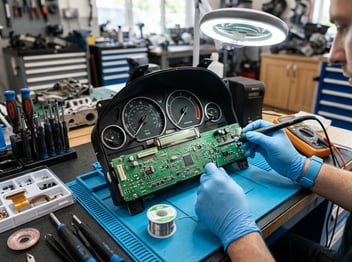
UpFix's approach goes down to the chip and board level. Rather than guessing and swapping components, every repair is based on precise diagnostics that pinpoint the exact failed part. This means only the failed component is replaced, minimizing both cost and material waste simultaneously. Non-toxic solvents, proper fume extraction, and recyclable packaging are standard practice at every stage.
For automotive owners, especially, this matters beyond the environmental impact. Your original module retains its VIN coding, calibration data, and configuration, meaning in most cases, a repaired module plugs straight back in without costly dealer reprogramming. You get a factory-condition unit, not a generic replacement that needs to learn your vehicle from scratch.
Watch UpFix in Action
The UpFix YouTube channel covers board-level repair walkthroughs, module service guides, and real repair case studies across automotive, appliance, and industrial electronics. See exactly what repair looks like at the component level.
The Conversation on Reddit
This post started as a community discussion in r/UpFix, a straightforward argument that resonated: we are replacing too much that could be repaired, and the cost is being paid by the environment.
Choose Repair First
Before you replace a module, board, or control unit, check if UpFix can restore it. Better for your wallet, and better for the planet.