 upfix.com
 888-979-9343
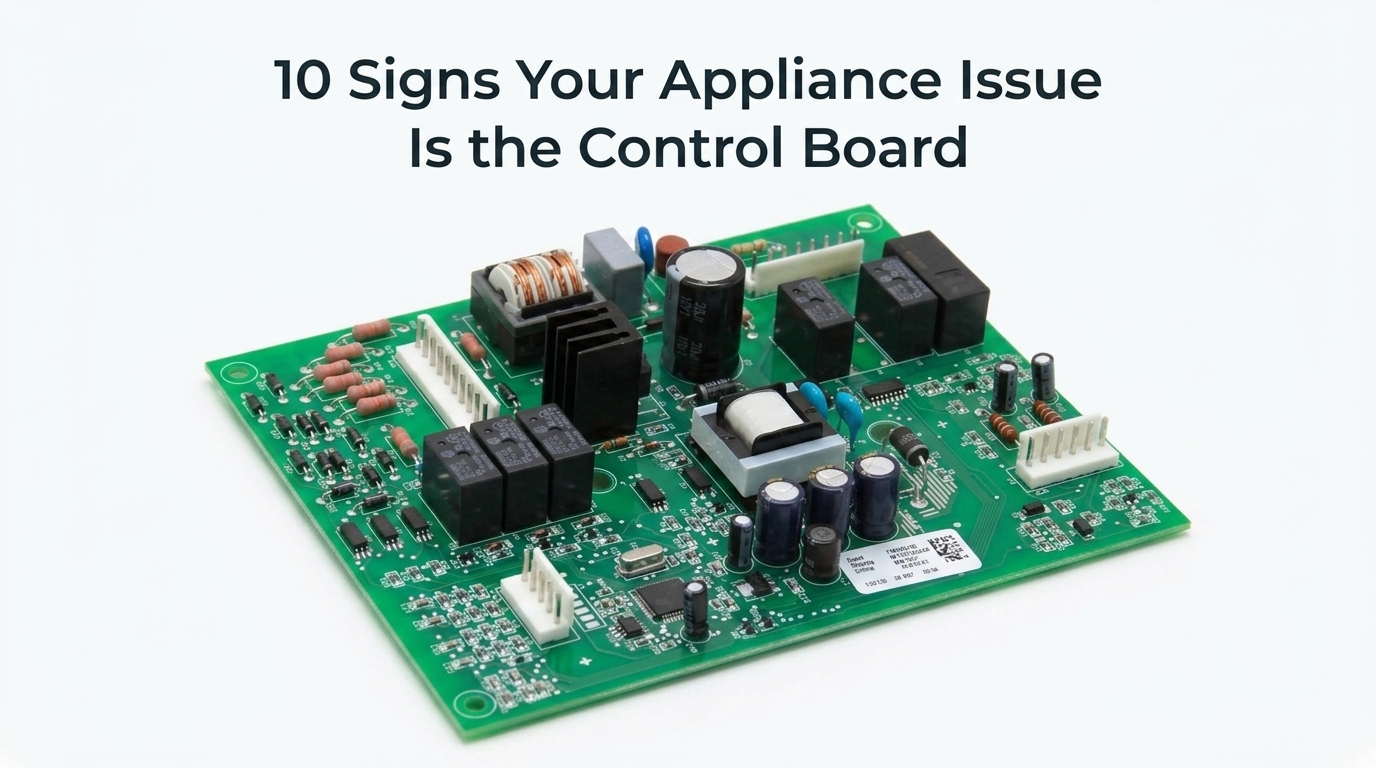
When an appliance stops working properly, most homeowners assume a major component has failed. Maybe the oven's heating element is bad, the dishwasher's pump has stopped working, or the refrigerator compressor is failing.
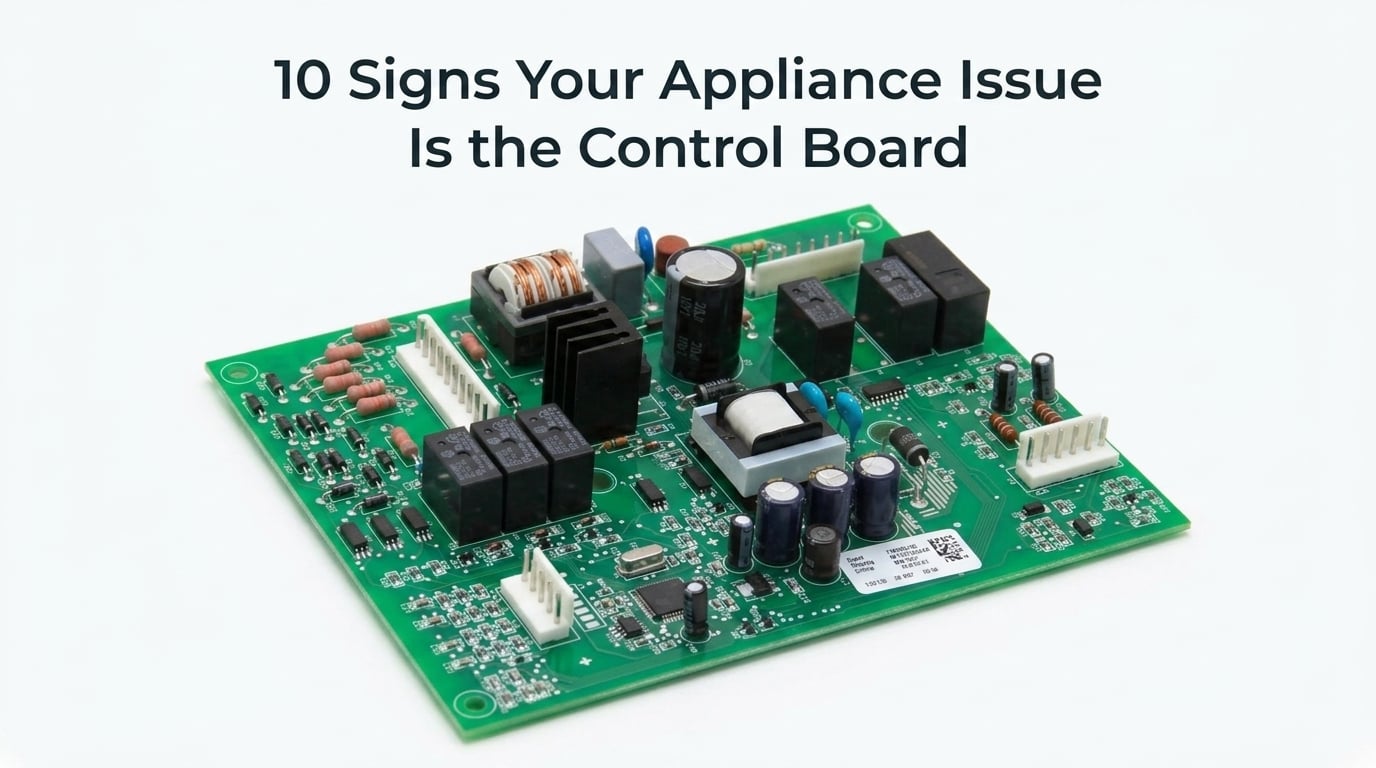
But in many cases, the real culprit is the appliance's electronic control board.
Modern appliances rely heavily on electronic controls to manage temperatures, cycle timing, sensors, motors, and safety functions. When the control board begins to fail, it can create symptoms that look like completely different problems.
Before you spend hundreds of dollars replacing parts or the entire appliance here are 10 signs the control board may actually be to blame.
1. The Appliance Has Power but Won't Start
One of the most common signs of a failing control board is when the appliance appears to have power but refuses to operate.
Lights may come on, the display may work, and buttons may respond, yet the appliance never begins its cycle.
Why This Happens
The control board may be receiving power but failing to send commands to critical components such as motors, heating elements, or pumps.
2. Error Codes Keep Returning
Most modern appliances display fault codes when something goes wrong.
If you've cleared an error code, reset the appliance, and the same code keeps returning even after replacing related sensors or components, the control board may be misinterpreting incoming signals.
Why This Happens
A failing board can generate false error codes or incorrectly process information from otherwise healthy components.
3. Buttons or Touch Controls Stop Responding
Have you ever pressed a button multiple times before the appliance finally reacts—or doesn't react at all?
Why This Happens
Control boards communicate with touchpads and user interfaces. When internal circuits begin failing, communication between the board and controls becomes unreliable.
This symptom is especially common in ovens, ranges, and dishwashers.
4. The Display Flickers, Goes Blank, or Shows Strange Characters
The display panel often provides early warning signs of electronic failure.
Why This Happens
Damaged capacitors, failing power supplies, or deteriorating circuit components can affect the voltage delivered to the display, causing:
- Flickering screens
- Missing display segments
- Random symbols
- Complete display failure
5. The Appliance Stops Mid-Cycle
If your dishwasher shuts off halfway through a wash cycle or your oven suddenly stops heating during cooking, the control board could be the source of the problem.
Why This Happens
A failing board may lose communication with critical components or restart itself unexpectedly, interrupting operation.
Intermittent failures often point to heat-related circuit board issues.
6. Temperatures Are Inconsistent
Temperature-related problems are frequently blamed on sensors, thermostats, or heating elements.
While those components can fail, control boards often play a major role.
Why This Happens
The board processes temperature readings and determines how much power to send to heating or cooling systems.
If the board misreads data or fails to regulate output properly, you may notice:
- Ovens running too hot
- Ovens running too cold
- Refrigerators struggling to maintain temperature
- Inconsistent cooling cycles
7. Multiple Components Stop Working at the Same Time
When several unrelated functions fail simultaneously, it's often a strong indicator of a control board issue.
Why This Happens
A single failed relay, damaged circuit path, or power supply component can affect multiple systems controlled by the board.
For example, an oven's display, heating function, and timer may all begin malfunctioning at the same time.
8. The Appliance Randomly Beeps or Resets Itself
Unexpected beeping, random restarts, or settings that continually reset can indicate an electronic problem rather than a mechanical one.
Why This Happens
Control boards contain memory circuits and processors that manage appliance operation.
When those circuits begin failing, the appliance may reboot itself, lose stored settings, or trigger false alerts.
9. All Other Components Test Good
Sometimes the biggest clue is what isn't broken.
Why This Happens
If sensors, switches, heating elements, valves, motors, and wiring all test within specification, the control board becomes the most likely failure point.
Professional technicians often diagnose control board failure only after eliminating all other possible causes.
10. There Is Visible Damage on the Board
While not every failed control board shows visible damage, some provide clear evidence.
Signs to Look For
- Burnt areas
- Discolored components
- Bulging capacitors
- Melted connectors
- Cracked solder joints
- Corrosion from moisture exposure
Any of these conditions can prevent the board from functioning properly.
What Causes Appliance Control Boards to Fail?
Control boards are designed to last for years, but several factors can shorten their lifespan.
Power Surges
Voltage spikes can damage sensitive electronic components.
Heat Exposure
Oven and range control boards operate in high-temperature environments that place constant stress on electronic circuits.
Moisture and Humidity
Dishwashers, refrigerators, and other appliances can expose control boards to moisture over time.
Aging Components
Capacitors, relays, and solder joints naturally degrade after years of operation.
Should You Replace or Repair the Control Board?
Many homeowners assume replacement is the only option when a control board fails.
However, replacement boards can be expensive, difficult to find, or even discontinued.
Typical Replacement Costs
Once you factor in:
- Diagnostic fees
- Replacement board costs
- Labor charges
Many appliance repairs can cost several hundred dollars.
The Repair Alternative
Component-level repair focuses on restoring the original control board rather than replacing it.
This approach often costs significantly less and can help extend the life of appliances that are otherwise functioning perfectly.
How UpFix Repairs Appliance Control Boards
At UpFix, we specialize in repairing appliance control boards at the component level.
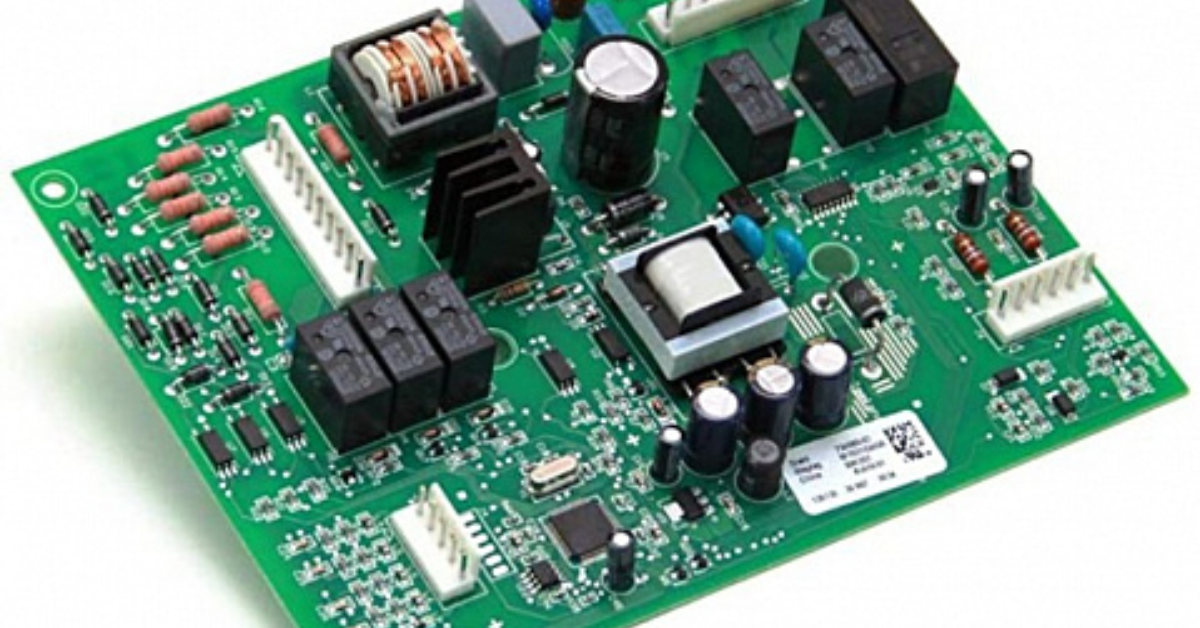
Instead of replacing the entire board, our technicians identify and repair failed electronic components such as relays, capacitors, resistors, and integrated circuits.
Appliances We Commonly Service
- Ovens and ranges
- Dishwashers
- Refrigerators
- HVAC control boards
- Ice maker control boards
- Vent hood control boards
Why Homeowners Choose UpFix
- Repairs starting at a fraction of replacement costs
- Fast turnaround times
- Component-level diagnostics
- Support for many discontinued boards
- Warranty-backed repairs
The Bottom Line
If your appliance is displaying strange behavior, don't assume the most expensive component has failed.
A bad control board can create symptoms that look like sensor failures, motor problems, heating issues, or communication errors.
Recognizing these 10 warning signs can help you identify the real problem sooner and potentially save hundreds of dollars in unnecessary replacement costs.
Before replacing your appliance or an expensive control board consider having the board professionally diagnosed and repaired by UpFix.